

Winter Tent Rentals in NJ: Tents with Walls and Heaters for Cold-Weather Parties

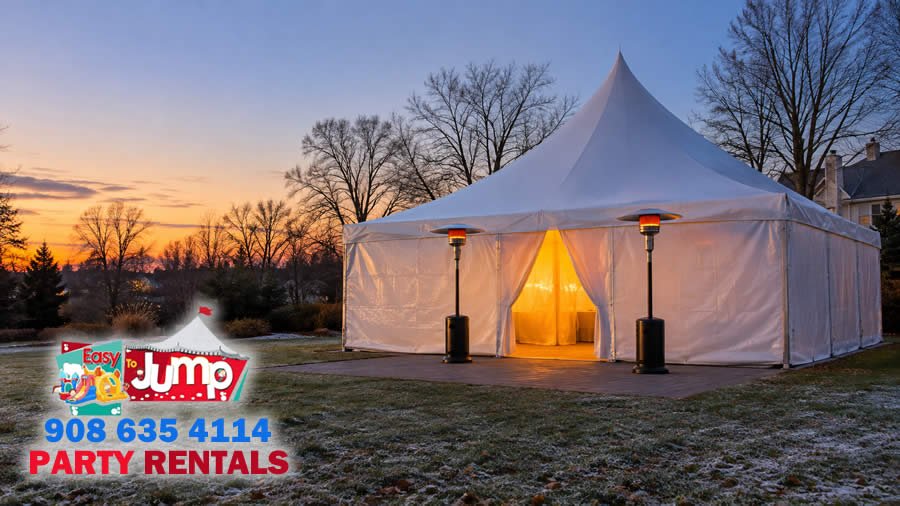
The invitation says 6 p.m. on a Saturday in late November. By 7:30, half the guests are eating with their coats on, and the other half have drifted toward the one corner where a heater happens to be. Nobody planned for that. The tent was booked, the caterer was confirmed and the playlist was ready. What was missing was a plan for staying warm.
A tent can work very well for a winter party in New Jersey, but only when it is set up as a cold-weather space and not as a summer tent with a heater parked nearby. This guide explains how walls, heat, flooring and layout fit together, and which questions to settle before you ask for a quote. Easy to Jump rents tents and heater packages in central New Jersey. The right setup depends on your site and your guest count, so the final step is always a call to confirm what fits your event.
Can you rent a tent for a winter party in NJ?
Yes. A tent is not a summer-only product. The roof keeps snow, sleet and rain off your guests, sidewalls cut the wind, and heaters raise the temperature inside. Each piece does a different job, and removing one usually shows. A tent with heaters but no walls loses its warm air as fast as it makes it. A tent with walls but no heat is a pleasant windbreak that still feels like a garage in January.
Think of it as building a room out of three parts: a ceiling, walls and a source of heat. The floor is a fourth part, and it gets its own section below.
What an open tent does and does not do in the cold
An open tent is mostly a roof. That is great for a July thunderstorm and much less useful on a 40-degree evening. It keeps precipitation off, but it does nothing about wind, and wind is usually what turns a cool night into an uncomfortable one. Warm air from a heater also drifts out through open sides almost immediately, so you end up paying for heat you never feel.
There is one more problem that people rarely anticipate: the ground. Cold, damp soil pulls warmth from the bottom up, and guests in dress shoes feel it within the first hour.
Sidewalls: the piece that makes a tent feel like a room
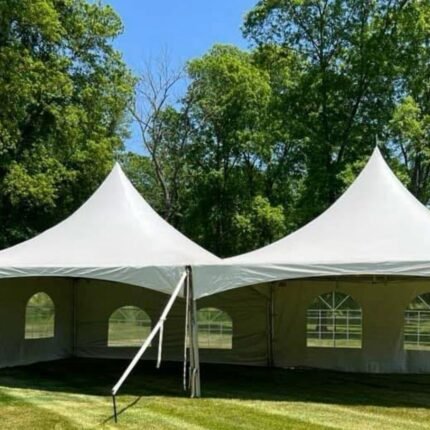
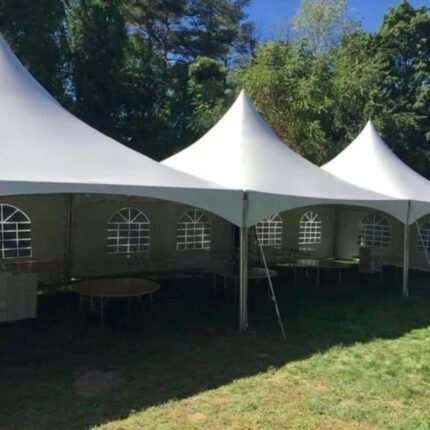
Walls are what change the character of the space. They block wind, hold in the heat you are paying for, and make the tent feel enclosed and finished at night, which matters a lot for a wedding or quinceañera where the atmosphere is part of the product. Wall styles vary from one rental company to another (solid panels, panels with windows, clear panels), so ask what is available for the specific tent you are considering and how it will look once the lights are on.
Closing a tent in also brings trade-offs worth knowing about before the event:
- Moisture. Warm breath, hot food and a crowd of people make a closed tent humid, and condensation can form on the inside of walls and the roof. A bit of airflow helps.
- Ventilation. This is a safety issue as much as a comfort one when fuel-burning heaters are involved. More on that below.
- Doors. Every time an entrance opens, cold air comes in. Decide which entrances guests, staff and caterers will use, and keep the number small.
- Coats. Guests arrive bundled up. If there is no coat area, jackets end up draped over the chairs you paid to rent.
Why a high peak tent pairs well with heaters
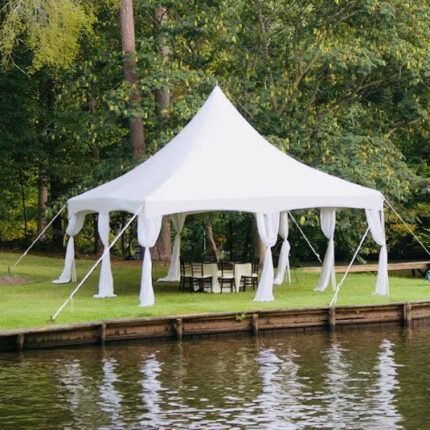
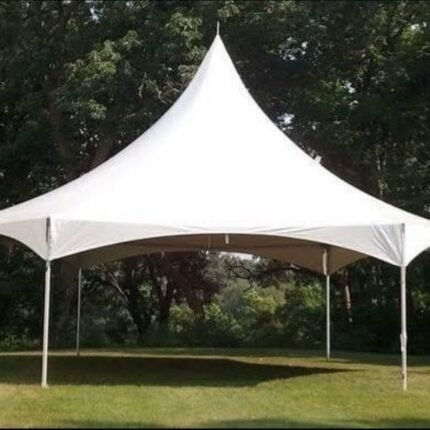
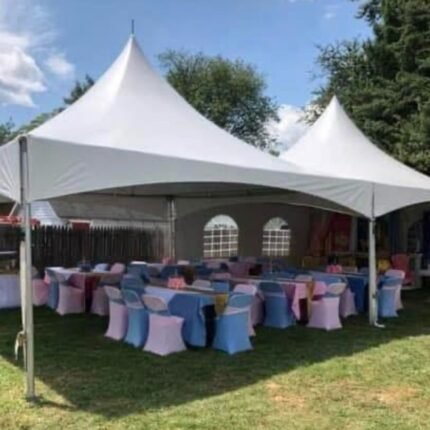
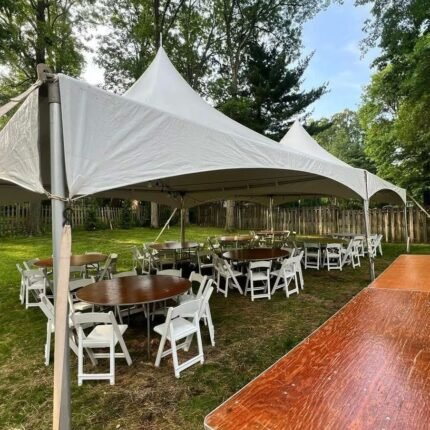
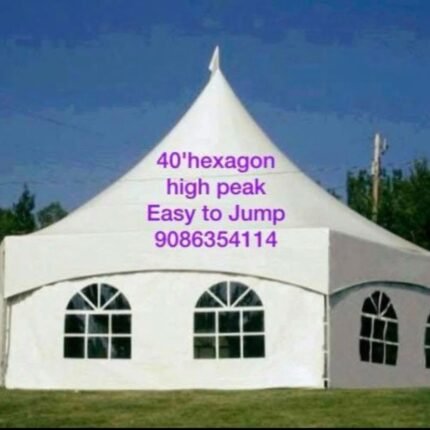
High peak tents have a raised, pitched center that gives the space headroom and a more open feel. For a winter party, that shape is a mixed blessing. The extra air volume makes the tent feel generous and gives heat somewhere to go, but warm air also rises, which is why heater placement matters more here than in a low structure. A rental crew that sets up heated tents regularly will think about this before they position anything.
If you are still deciding between tent styles, the high peak tent category shows what Easy to Jump offers. Also keep in mind that heaters, walls and a dance floor all change how much usable space you have, so it helps to settle tent size first. The guide on choosing the right tent size for a NJ wedding walks through that part, and the same logic applies to winter parties.
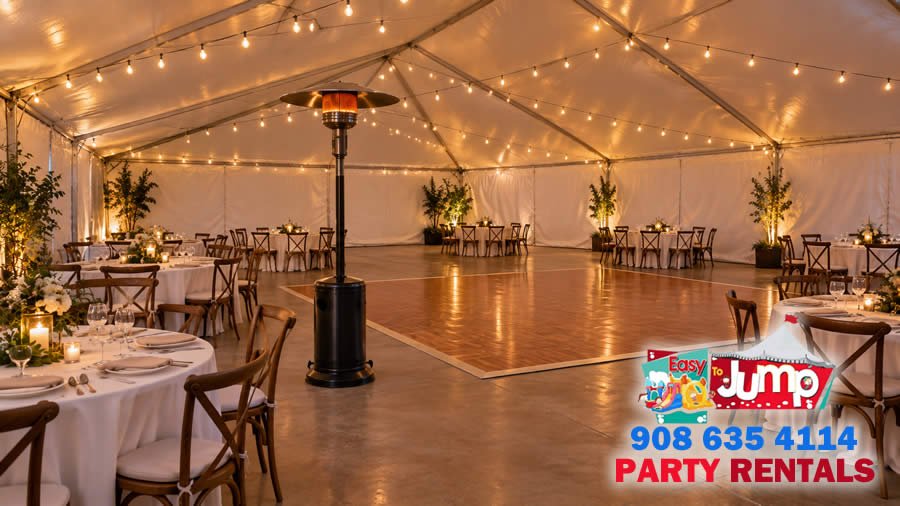
Heater placement, floor space and tables all need to be planned together.
Heaters: what the package covers and how to think about quantity
Easy to Jump offers Heater and Gas packages: gas patio heaters meant to bring warmth under high peak tents. The practical question most people ask is how many they need, and there is no honest universal answer. The number depends on several things at once:
- The weather you expect. A mild evening in early November and a windy night in January are different problems.
- Whether the tent has walls. An enclosed tent holds heat far better than an open one.
- The size of the tent and the number of guests. A bigger space needs more heat sources, and a crowd of people generates some warmth of its own.
- How long the event runs. A two-hour reception and an eight-hour party with setup and teardown are different gas demands.
Spread matters as much as count. A single powerful heater creates one hot spot that everyone crowds around while the far side of the tent stays cold. Several heaters distributed through the space warm more guests more evenly. When you contact Easy to Jump, give them your guest count, the tent size you are considering, the date and whether you want walls, and let them tell you what they would recommend for that setup. That is a better approach than guessing a number from a blog post, this one included.
Heater safety and ventilation, in plain terms
Propane patio heaters are common at winter events, and they are safe when used correctly. A few general principles apply to almost every situation:
- Fuel-burning heaters need fresh airflow. Do not seal a tent so tightly that there is no ventilation.
- Keep heaters well away from fabric walls, decorations, balloon arches, drapery and anything flammable. Follow the manufacturer’s clearance instructions.
- Place them where guests cannot knock them over, away from busy walkways and the dance floor.
- Let the rental crew handle installation and positioning. Easy to Jump delivers and sets up its equipment professionally, which is one less thing for the host to troubleshoot at 4 p.m. on the day of the party.
- Rules about heaters and tents can differ by town, so ask your municipality or local fire official what applies to your property.
A dedicated safety guide on this topic is planned for this blog. Until then, treat these points as a starting checklist, not a complete safety plan.
The floor under your feet
Grass in November is cold, damp and sometimes soft. Even if the weather is dry on the day, the ground may not be. Guests walking in heels or dress shoes will notice an uneven or muddy surface long before they notice the décor.
A dance floor solves part of this. It gives people a solid surface to stand on and dance on, and it keeps the center of the party away from the damp ground. It will not cover the entire tent, so think about where tables, the buffet and the bar will sit relative to the floor. If you are weighing a winter tent against a rented hall, the floor is one of the details that shows how much the tent needs to be treated as a full venue.
Comparing the main setups
| Setup | What it handles well | Where it falls short | Best suited to |
|---|---|---|---|
| Open tent, no heat | Rain, snow and sleet overhead | Wind and cold air; guests get chilly quickly | Short daytime gatherings on mild days |
| Tent with walls, no heat | Wind, precipitation, a more finished look | Still cold on a cold evening | Brief events or milder fall weather |
| Tent with walls and heaters | Wind, precipitation and temperature | Needs ventilation planning, gas supply and careful heater placement | Evening receptions, quinceañeras, Sweet 16s, holiday parties |
| Walls, heaters and a dance floor | All of the above, plus a dry, solid surface for the crowd | Takes more floor space; needs a larger tent | Events with dancing, a DJ or a long guest list |
Light, power and the early dark
In midwinter the sun sets before 5 p.m. in New Jersey, so a tent that felt bright at a noon walkthrough can feel completely different by the time guests arrive. Think about lighting inside the tent, at the entrance and along the path from the parking area. Also ask what power the setup needs and how it will be supplied, especially if you plan to use a DJ, lighting, a buffet with warming equipment or any other electrical gear. Do not assume a household outlet will carry all of it.
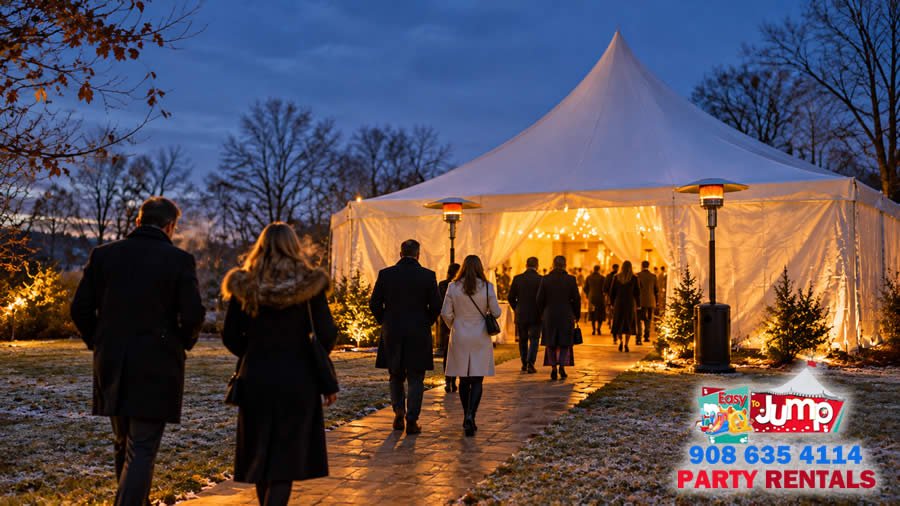
Entrances, lighting and coat space all shape how comfortable guests feel when they arrive.
Questions to settle before you book
The more you know about your site, the quicker the quote conversation goes. A short walk around the property before you call will answer most of this:
- Where will the tent go? Lawn, patio and driveway each affect how a tent is anchored and what the surface feels like in cold weather.
- How does the ground drain? Look for low spots that collect water after rain or melting snow.
- Can the delivery crew get close? Gates, narrow driveways, fences and overhanging branches all matter.
- Who clears snow if it falls before the event? A tent site that is buried on the morning of setup is a problem you want to know about in advance.
- Does your town require a permit or inspection for a tent of this size? Some municipalities do, and requirements vary. Your town hall or fire department can tell you.
- Where will coats, food service and the bar go? Decide this before the layout is final.
Keeping the food and the party moving
Cold air changes how an event runs. Buffet food cools quickly, so warming equipment such as chafing dishes earns its place. Guests spend less time wandering and more time clustered near heat, which means the music and the dance floor matter more than at a summer event: people stay in the tent when there is something to do inside it. Pairing a tent with a DJ and a bar usually works better than leaving a quiet tent and hoping the crowd stays warm out of loyalty.
Mistakes that make a winter tent party uncomfortable
- Treating heaters as an afterthought. They shape the layout. Decide on them when you choose the tent, not the week before the party.
- Choosing tent size by guest count alone. Heaters, a dance floor, a buffet and a coat area all take room that chairs would otherwise occupy.
- Leaving every door open. More openings mean more heat loss, and each one is a draft on someone’s neck.
- Underestimating how long the heaters will run. Setup, early arrivals and a late finish all add hours.
- Ignoring the ground. A beautiful tent over cold, wet grass still feels cold.
- Waiting too long to book. Popular weekends in November and December tend to get claimed early, and winter plans need extra lead time for walls and heating equipment.
Timing and weather backup
Rental calendars fill on popular weekends, and the holiday season is one of them. Reserve as early as your plans allow, and confirm your delivery and setup window ahead of time. Winter weather can shift things, so ask how the rental company handles a major storm forecast and what the plan is if conditions make setup difficult. A realistic backup plan is part of a good winter event plan.
Where Easy to Jump delivers
Easy to Jump is based in Manville and serves central New Jersey, including Hillsborough, Basking Ridge, Warren and Bridgewater, along with neighboring towns depending on the size of the order. You can see the current coverage on the service area page. If your venue is outside those towns, a quick call will tell you whether delivery is possible.
Frequently asked questions
Can I rent a tent for a party in the winter in NJ?
Yes. Tents can be used year-round in New Jersey. For cold weather, the setup matters: add sidewalls to block wind, heaters to warm the space and a solid floor so guests are not standing on cold, damp ground. Contact the rental company early to confirm availability for your date.
What is the difference between a tent with walls and an open tent in cold weather?
An open tent keeps rain and snow off guests but does little against wind and cold air. A tent with walls blocks wind and holds heat, so it feels like an enclosed room. Walls also change ventilation and condensation, so they should be planned together with heating.
How many heaters do I need for a winter tent party?
There is no single number. It depends on the temperature, whether the tent has walls, the tent size, the guest count and how long the event lasts. Spreading several heaters through the space usually warms guests more evenly than one strong heater in one spot. Share those details with the rental company and ask for their recommendation.
Is it safe to use propane heaters under a party tent?
It can be, with precautions. Keep heaters away from fabric and decorations, place them where guests cannot knock them over, make sure the tent has ventilation, and follow the manufacturer’s instructions. Rules vary by town, so check with your municipality or local fire official. Having the rental crew install and position the equipment helps.
How far ahead should I book a tent for a December party?
As early as you can. Popular weekends in the holiday season are in demand, and winter setups with walls and heaters need extra coordination. Contact Easy to Jump as soon as you have a date and a rough guest count so they can confirm availability and the right equipment.
Do I need a permit for a tent at my event?
It depends on the municipality and the size of the tent. Some towns require permits or inspections for tents, especially larger ones, and heating equipment can add requirements. Ask your town hall or fire department before the event.
Plan the warm version of your event
A winter tent party can be one of the most memorable settings you can choose: lights glowing against an early dark sky, a full dance floor, guests comfortable enough to stay until the end. It just takes a bit more thinking up front than a summer event. Walk your site, decide who needs to know about the date and the guest count, and talk to a rental team that handles cold-weather setups.
To ask about tents, walls and the Heater and Gas packages for your date, call Easy to Jump at 908-635-4114 or send a message through the contact page. Tell them your date, location and guest count, and they can confirm what fits your venue.
